
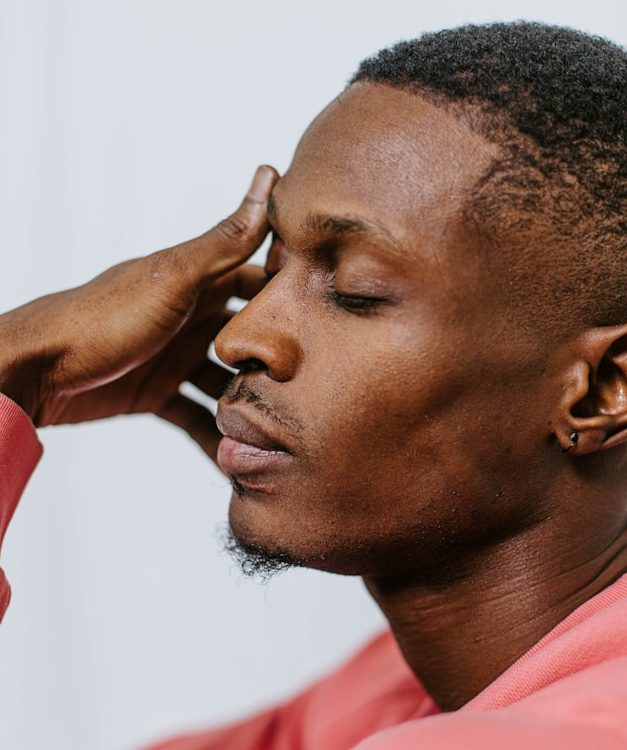
Not Weak. Just Human — A New Conversation About Black Men and Mental Health
When we talk about mental health in America, one truth quietly lingers: Black men remain among the least likely to seek therapy. Not because they don’t feel pain — but because they’ve been taught to carry it silently.
The Inherited Silence
For generations, Black men have carried visible and invisible burdens — systemic racism, economic struggles, community expectations, and the unrelenting demand to “hold it together.” Institutions designed to offer safety have often delivered harm instead. The resulting mistrust was not imagined; it was learned through unequal treatment, misdiagnoses, and exclusion.
Out of that history grew a familiar refrain:
Be strong. Be the provider. Don’t show weakness. Handle your business.
Over time, composure became confused with strength. Vulnerability — once natural and human — began to feel like failure. So “I’m overwhelmed” became silence. “I’m depressed” turned into “I’m tired.” And “pushing through” too often led to breaking down.
The Man in the Mirror
I once sat across from a man in his early forties — a husband, father, and high achiever. It was his first therapy session. “I don’t even know what I’m supposed to say,” he confessed, polite yet guarded, as if emotion were a language he’d forgotten.
He described waking every night at 3 a.m., heart racing. He admitted that his patience with his children was thinning and that he sometimes paused in the driveway after work, gathering himself before going inside.
“I can’t let them see me like this,” he whispered. “My dad never complained. My grandfather worked two jobs. I don’t have the right to fall apart.”
Behind those words lived decades of learned beliefs — that struggle equals failure, composure equals worth. He had carried work stress, financial strain, and grief alone.
Over time, he discovered that real strength isn’t the absence of emotion — it’s the courage to feel it. Honesty built connection; vulnerability fostered trust. His children didn’t lose respect — they gained emotional language. His marriage didn’t weaken — it deepened.
The Barriers Beneath the Surface
While stigma still lingers, systemic barriers remain powerful obstacles.
- Limited access to culturally responsive therapists
- Financial and insurance constraints
- The fear of being misread or stereotyped
These obstacles make therapy feel unsafe. Until representation and cultural humility become standard, trust in mental health systems will remain fragile.
Redefining Strength, Reclaiming Wholeness
Therapy doesn’t dismantle masculinity — it redefines it.
It reminds us that feelings are not threats but signals inviting authenticity. Asking for help reflects self-respect, not surrender. Healing is not weakness — it’s wisdom.
When Black men heal, families shift. Children learn emotional literacy. Communities grow stronger. The silence inherited through generations gives way to honest conversation and collective resilience.
The man who once paused in his driveway now opens his front door differently — not because life is easier, but because he no longer carries it alone.
And neither should you. You’re not weak. You’re human.
Join the Conversation: A Group for Black Men Over 25
Join Dr. Latasha McFarland and Winston McFarland for an All African American Male Therapy Group beginning Thursday, March 5 at 8 PM.
This confidential eight‑week journey offers a supportive, judgment‑free space where brothers gather to share truth, build strength, and heal together.
You’re not alone. Healing starts here.