
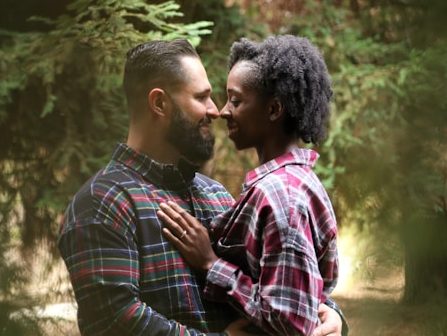
Love Begins at the Kitchen Table
Culture is a set of customs, rituals, traditions, languages, values, and beliefs within a community that are shared from generation to generation.
When I think about love across cultures, I don’t begin with textbooks or theories. I start at my own kitchen table. As an African American woman married to a wonderful partner with West African heritage, our family life is a colorful blend of rhythms, flavors, and languages. Our holidays include jollof rice alongside sweet potato pie, the sound of spades cards slapping next to an oware board, and our kids switching easily between AAVE and Twi. We laugh about how our worlds overlap and differ. Sometimes, those very differences can stretch us thin, but honestly, that’s part of what makes our connection feel alive and authentic.
Washington: a Love Mosaic
In the Washington Metropolitan Area, I see so many couples navigating a similar blend. This region is a living mosaic of cultural influences. Love within it can feel like both an exploration and an education. Shared traditions expand our horizons, yet they can also surface moments of tension.
Everyday Crossroads in Multicultural Relationships
Consider a few familiar crossroads:
- Should we host a multi‑day traditional wedding, or choose a simple ceremony that fits local customs?
- Which foods make it onto the family table, and which might be set aside for religious or cultural reasons?
- When visiting relatives, do we stay under one roof for togetherness, or opt for the privacy of a hotel?
These are not just logistical questions. They touch on belonging, respect, and identity. They ask us to balance where we come from with the shared culture we are building in real time.
From “My Way” to “Our Way”
I’ve learned, both personally and in my clinical work, that real magic happens when partners turn toward each other’s stories with curiosity. Instead of “my way or your way,” the deeper question becomes, “What matters to you, and why?”
The Traits That Help Love Thrive
In therapy, this is often where growth takes root. Research on relationship satisfaction highlights three personality traits that foster healthier, more resilient partnerships: high agreeableness, high openness, and low neuroticism.
- High agreeableness supports empathy and warmth. It’s the muscle that helps us listen and respond with gentleness, even in disagreement.
- High openness nurtures curiosity, making space for exploration instead of defensiveness.
- Low neuroticism reflects emotional steadiness and adaptive coping. It keeps communication grounded when things heat up.
When these qualities are cultivated through reflection, practice, or therapy, partners become not just tolerant of differences but enriched by them.
Love That Expands and Deepens
In multicultural relationships especially, these traits invite us to transform moments of tension into opportunities for connection and discovery. After all, isn’t that what most of us long for? To feel seen, valued, and genuinely connected—while staying rooted in who we are and where we come from.
Find a Therapist, schedule an appointment with Jasmine Adjei, LGPC
O’Meara, Madison S., and Susan S. South. “Big Five Personality Domains and Relationship Satisfaction: Direct Effects and Correlated Change over Time.” Journal of Personality, vol. 87, no. 6, 2019, pp. 1206–1220. PubMed Central, https://pmc.ncbi.nlm.nih.gov/articles/PMC11239117/.